
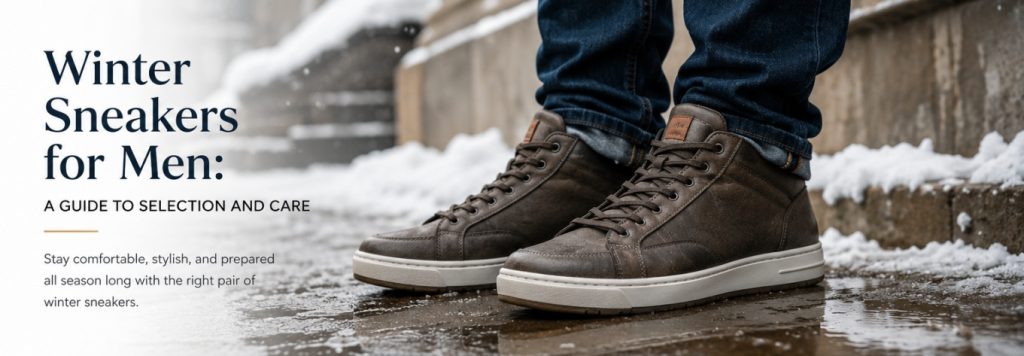
Winter sneakers have become a practical choice for men who want everyday comfort without sacrificing style during the colder months. Unlike lightweight summer footwear, winter sneakers must cope with rain, snow, low temperatures, and slippery surfaces while still providing the flexibility and comfort people expect from casual shoes.
Choosing the right pair isn’t simply about appearance. The materials, construction, insulation, and ongoing care all influence how well your sneakers perform throughout the season. With a little knowledge and regular maintenance, a quality pair of winter sneakers can remain comfortable and attractive for many winters to come.
Understanding the Challenges of Winter Weather
Winter creates conditions that are far more demanding than most people realize. Moisture is perhaps the biggest enemy of casual footwear. Rain and melting snow can soak into shoe materials, making feet cold and uncomfortable while gradually weakening the structure of the shoe.
In regions where roads and sidewalks are treated with salt, another problem appears. Salt residue may leave stubborn stains on uppers while slowly drying out leather and other materials. If left untreated, it can shorten the lifespan of even well-made footwear.
Cold temperatures also affect the flexibility of shoe materials. Rubber outsoles can become firmer, while some synthetic materials lose elasticity in freezing weather. Combined with wet sidewalks and icy streets, these conditions make proper footwear even more important during winter.
Understanding these seasonal challenges makes it much easier to choose footwear that performs well when temperatures begin to drop.
Choosing Materials That Perform in Cold Weather
One of the most important factors when buying winter sneakers is the material used in the upper.
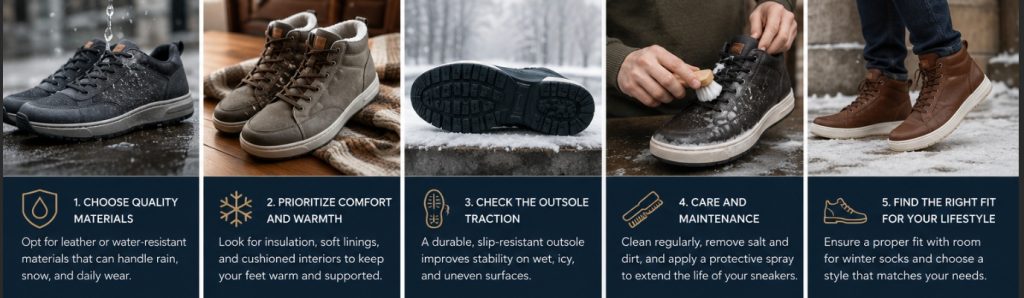
Leather remains one of the most reliable options because it naturally offers better durability and water resistance than many lightweight fabrics. When properly treated, leather can handle occasional rain and snow while maintaining its appearance over time.
High-quality microfiber and advanced synthetic materials have also become popular alternatives. Many modern technical fabrics combine lightweight comfort with improved resistance to moisture, making them ideal for daily commuting or casual outdoor activities.
Regardless of the material, careful construction is equally important. Reinforced stitching, durable outsoles, and quality craftsmanship help ensure the sneakers remain dependable after months of regular winter wear.
Comfort Matters Just as Much as Protection
Cold-weather footwear should keep your feet comfortable from morning until evening. A shoe that feels stiff or restrictive can quickly become tiring during long walks or daily commuting.
A well-designed winter sneaker provides enough room for thicker socks without feeling loose. Cushioned insoles help absorb impact on hard pavement, while supportive midsoles reduce pressure on the feet during extended periods of walking.
Breathability also plays a surprisingly important role. Although warmth is essential, trapped moisture inside the shoe can make feet feel cold once temperatures drop. Linings that manage moisture while retaining warmth help create a much more comfortable wearing experience.
Finding the right balance between insulation and ventilation is often what separates an average winter sneaker from an excellent one.
Winter sneakers are more than just seasonal fashion—they are an important part of staying comfortable and protected throughout the colder months. Choosing durable materials, supportive construction, reliable outsoles, and the correct fit will help your footwear perform in changing winter conditions.