
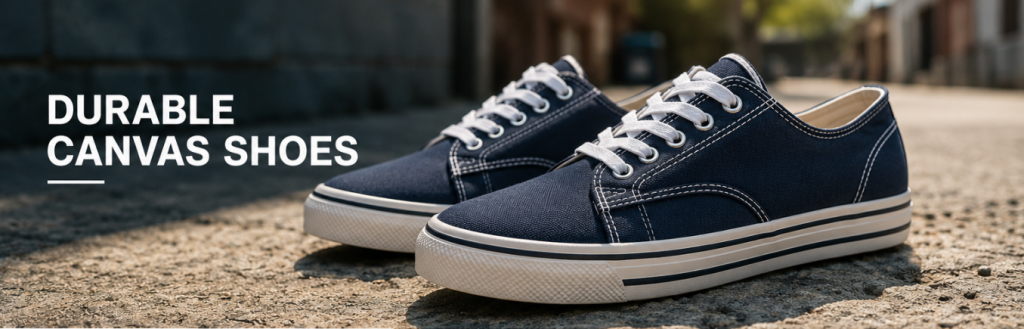
Durable canvas shoes have remained popular for decades thanks to their ability to combine comfort, versatility, and long-lasting performance in everyday wear.When consumers evaluate canvas shoes, they often focus on the upper material, stitching quality, or overall design. However, one component has a much greater impact on the lifespan of the shoe than many people realize: the sole.
The sole is the foundation of every canvas shoe. It supports body weight, absorbs impact, provides traction, and protects the upper from daily wear. Even the highest-quality canvas upper will struggle to deliver long-term performance if it is paired with a poorly constructed sole.
Understanding the role of soles in the durability of canvas shoes can help buyers make better purchasing decisions and help manufacturers create footwear that lasts longer in real-world conditions.
Why the Sole Matters More Than Many People Think
Every step a person takes places pressure on the outsole. Unlike the upper section, which mainly protects the foot and contributes to appearance, the sole directly interacts with the ground throughout the shoe’s life cycle.
From concrete sidewalks and warehouse floors to school hallways and outdoor pathways, the sole constantly faces friction, impact, moisture, and environmental stress. Because of this, the quality of the sole often determines how long a pair of canvas shoes remains functional.
When the outsole begins to wear down, traction decreases, stability is affected, and the overall structure of the shoe may weaken. In many cases, the sole fails before the canvas upper shows significant signs of damage.
This is why sole construction should never be overlooked when evaluating canvas footwear.
Durability Starts with Material Selection
The material used in the sole has a direct influence on wear resistance and long-term performance.
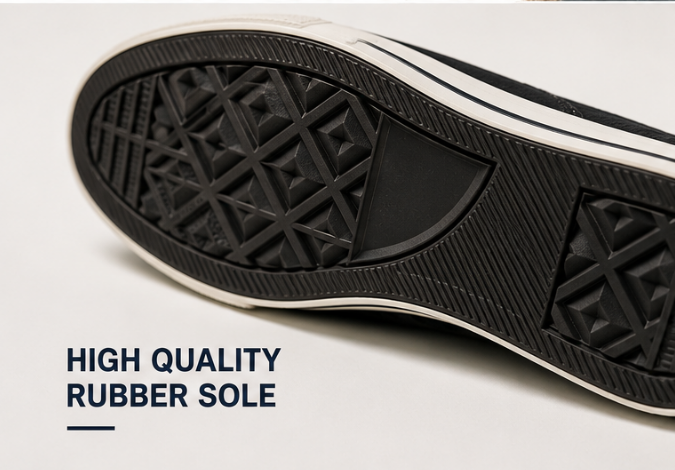
Rubber remains one of the most widely used outsole materials for canvas shoes. Its flexibility, abrasion resistance, and reliable grip make it suitable for daily use across a variety of surfaces.
Natural rubber typically offers excellent traction and elasticity, while synthetic rubber compounds can be engineered to improve durability and reduce manufacturing costs.
Some canvas shoes use EVA (Ethylene Vinyl Acetate) as part of the sole construction. EVA is lightweight and provides excellent cushioning, making shoes more comfortable during prolonged wear. However, EVA alone may not offer the same abrasion resistance as rubber when exposed to rough surfaces over time.
For this reason, many manufacturers combine EVA midsoles with rubber outsoles, creating a balance between comfort and durability.
Higher-quality sole compounds can withstand thousands of walking cycles while maintaining their structural integrity, helping extend the lifespan of the footwear.
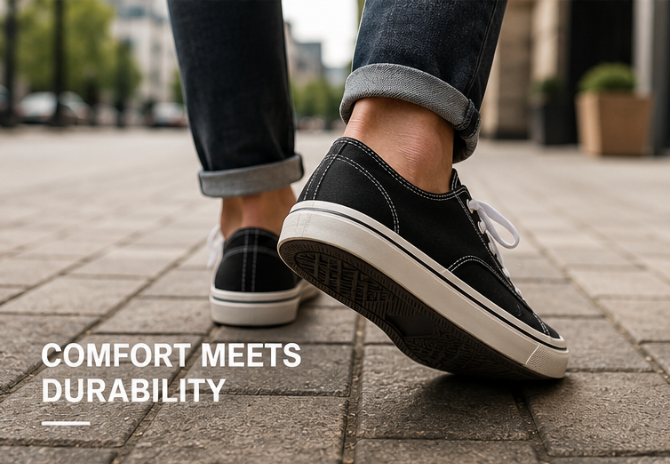
Durable canvas shoes rely heavily on high-quality sole construction to deliver long-term comfort, stability, and wear resistance. A quality sole does far more than separate the foot from the ground—it absorbs impact, improves traction, and helps preserve the overall structure of the shoe. By choosing canvas footwear with durable outsole materials and reliable construction, consumers can enjoy better performance and a longer product lifespan.